
State Tourism Departments
Destination photography, campaign imagery and the building of an owned image bank, so a state’s visual assets belong to the state rather than to a stock library.
The Indian Institute of Photography designs and delivers photography, videography and visual documentation training for government departments, public sector bodies and uniformed services.
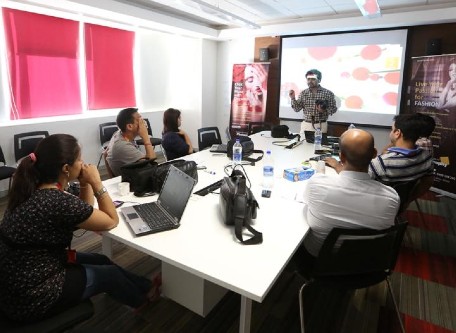
A decade ago, a state department’s visual output was an annual report and a press photograph. Today every directorate runs social media, every scheme requires photographic documentation for reporting, every tourism board competes for attention on platforms where the image is the entire argument, and every field officer carries a camera capable of professional work.
Mission Karmayogi reframed government training from seniority-based to role-based. Under the Framework of Roles, Activities and Competencies, every civil service position is calibrated to the behavioural, functional and domain competencies it requires.
Visual documentation sits squarely inside that framework as a functional competency — and it is one of the few that almost no departmental capacity-building plan currently addresses, despite nearly every department depending on it daily.
For thirty years I have watched this country be photographed by people who were visiting it. Its festivals, its crafts, its forests, its villages — recorded beautifully, and almost always by someone from somewhere else.
Meanwhile the officer posted in that district, who knows the place as no outsider ever will, has a camera in his pocket and nobody has ever spent two days teaching him how to use it.
When we train a tourism officer, a forest ranger or a district information officer, we are not teaching a hobby. We are handing the authorship of India’s record back to the people who belong to it. A photograph made by someone who understands what he is looking at will always carry something a hired lens cannot find.
That is why, sixteen years and thirty-three thousand students after we began, the government work matters to me more than any of it.
Training designed around the work your people already do, the subjects they document and the standards their roles require.
Destination photography, campaign imagery and the building of an owned image bank, so a state’s visual assets belong to the state rather than to a stock library.
Documentation of monuments, crafts, festivals and intangible heritage to archival standard.
Field documentation, camera-trap imagery, habitat and census photography, and conservation communication.
Scheme documentation, press-grade photography, event coverage and departmental social media.
Scene and evidence documentation, technical photography protocols and chain-of-record discipline.
Plant, project and CSR documentation; internal communication; annual reporting imagery.
Choose a duration and format that matches the department’s training objectives, participant needs and operational requirements.
| Programme format | Duration | Best suited for |
|---|---|---|
| Orientation workshop | 2–3 days | Awareness and baseline skills across a large group |
| Short-term certificate | 1–4 weeks | Focused upskilling of a specific cadre |
| Mid-term programme | 1–3 months | Departmental documentation teams and blended delivery |
| Long-term diploma | 6–12 months | Dedicated photographers, officers on deputation and resettlement cohorts |
| Specialist module | Scoped to brief | Forensic, aerial and drone, wildlife and archival photography |
Practical training built around real departmental work, with individual critique and a defined outcome.
The programme is developed around your department’s objectives, subject matter and intended outcomes.
Theory is compressed. Most contact hours are fieldwork on your own monuments, forests, facilities and schemes.
Every participant’s submitted work is reviewed and critiqued individually by a named mentor.
Programmes close with assessment, certification and, where appropriate, an exhibition or departmental image bank handed over as a deliverable.
IIP designs and delivers photography, videography and visual documentation training for government departments, public sector bodies and uniformed services.
Engagements range from two-day workshops to one-year diploma programmes.
Agreement in place for photography and visual design education, supporting the state’s design and creative skilling mandate.
Work awarded for a photography capacity-building programme for departmental personnel, delivered in mentor-led groups across a structured multi-day schedule.
Share your department’s objectives, participant profile and training requirements. We will work with you to develop a programme suited to your brief.